 Products Home

テレセントリックレンズ
テレセントリックレンズは、物体の距離または視野範囲での位置にかかわらず一定の倍率を保てるよう設計されています。物体の位置にかかわらず物体の寸法に変化はないので、この特性はマシンビジョンにおける計測に適しています。
テレセントリックレンズの種類
テレセントリックレンズの性能を得るためには、すべての主光線(軸外の物点から開口絞りの中心を通る光線)が像側、物体側、あるいは両側で光軸に対して平行でなければなりません。物体側テレセントリックレンズの場合、主光線はレンズの物体側(物体空間)において光軸に対して平行となります。これは、レンズの前側焦点面で開口を絞ることにより実現し、その結果、入射瞳が無限遠になります。主光線が入射瞳の中心を透過するので、レンズの物体側の主光線は光軸に沿って平行となります。物体側テレセントリックレンズの例が図1に描かれています。

図1:物体側テレセントリックレンズシステムの光線追跡。主光線(各色の中心光線)がレンズの物体側の光軸に対して平行であるのに対し、像面側の光軸に対しては角度がついています。
像面側テレセントリックレンズの場合、主光線はレンズの像面側(像空間)において光軸に対して平行となります。これは、レンズの後側焦点面で開口を絞ることにより実現し、その結果、射出瞳が無限遠なります。主光線が射出瞳の中心を透過するので、レンズの像面側の主光線は光軸に沿って平行となります。両側テレセントリックレンズの場合、前側と後側焦点面が重なる位置に開口絞りが配置され、入射瞳と射出瞳が共に無限遠になるように設計されています。両側テレセントリックレンズの倍率は像ならびに物体の位置に影響されることはありません。図2は、テレセントリックレンズを通る光線の追跡例で、主光線がどのようにシステムを透過するか示しています。
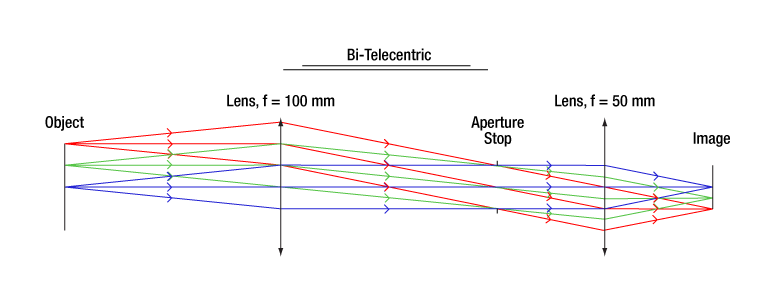
図2:両側テレセントリックレンズシステムの光線追跡 主光線(各色の中心光線)がレンズの物体側・像面側の光軸に対して平行なので、物体までの距離にかかわらずレンズの倍率は一定であることを意味します。
標準的なレンズ
標準的なレンズでは入射瞳と射出瞳は無限遠にはないため、主光線が光軸に対して平行にはなりません。この場合、レンズの倍率は物体までの距離ならびに視野範囲での位置によって決まります。図3は、標準レンズの光線追跡例です。主光線が像面ならびに物体側の光軸に対して斜めになっています。図2ならびに図3のレンズはともに同じ仕様のレンズを使用しています。しかし、開口絞りの位置に相違があります。
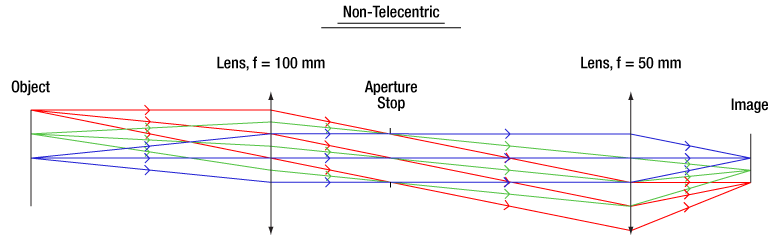
図3:標準レンズシステムの光線追跡 主光線(各色の中心光線)がレンズの物体側・像面側両方の光軸に対して平行ではありません。つまり物体までの距離によってレンズの倍率が変化することを意味します。
画像例
図4はテレセントリックレンズで撮像した写真、図5は、標準的なレンズで撮像した写真です。テレセントリックレンズで撮像した画像では、2つのネジが光軸に沿って約45 mm離れているのにもかかわらず、同じ高さに見えます。標準的なレンズで撮像した画像では、2つのネジの高さが違って見えるので、マシンビジョンにおいては不正確な寸法が測定されます。

Click to Enlarge
図4:0.128倍率のテレセントリックレンズMVTC23013(旧製品)で撮像した2つのキャップスクリュ。 同じサイズのものが同じ物体面にあるように見えますが、実際は光軸に沿って約45 mm離れています。

| Posted Comments: | |
HB Shin
(posted 2023-05-14 00:01:41.91) I tried to make bi-telecentric lens set, and purchased LB1761 (F=25.4mm, back focal length=22.2mm) and LB1471 (F=50.0mm, back focal length=48.2mm). I placed two lens with 70.4 mm spacing, that is, vertex to vertex distance. And then, I put the lens system onto CMOS camera, but it catchs the image only at some distance. Do I calculate the focal distance in a wrong way? ksosnowski
(posted 2023-05-25 10:54:04.0) Thanks for reaching out to Thorlabs. Typically some aperture stop is used in bitelecentric systems, and while magnification doesn't change with distance in these systems, there is still a finite depth of field. I have reached out to discuss this application in more detail. mojtaba seydi
(posted 2019-06-03 11:58:19.72) Hello. There is a typo in the "Conventional Lenses" part, when you want to refer figure 3. "figure 2 is wrong" YLohia
(posted 2019-06-03 11:36:26.0) Hello, thank you for bringing this typo to our attention! We're working to get this corrected. |
 テレセントリックレンズ テレセントリックレンズ |